Experience local Wiradjuri Artist, Creator & Educator Brett Groves original artworks and products, commissioned art, murals, greeting cards, prints, cultural items, essential oils, honey, bush tucker tea, workshops.
Discover all the local must-see places to visit and stay as Brett shares his local knowledge and welcomes you to Wiradjuri Country.
Gang Gang Gallery is housed in one of Lithgow's many historic buildings. Situated in the the heart of the Seven Valleys in Lithgow's Main Street, opposite the Rose Gardens of Queen Elizabeth Park and next to the old Theatre Royal, it has been beautifully restored and now stands proud as one of the Blue Mountains and Central Wests leading Contemporary Art Spaces. Jump on their web site to see all they have to offer from fine and contemporary art, gifts, workshops, music and dining events as well as numerous community collaborations. They have something for everyone.
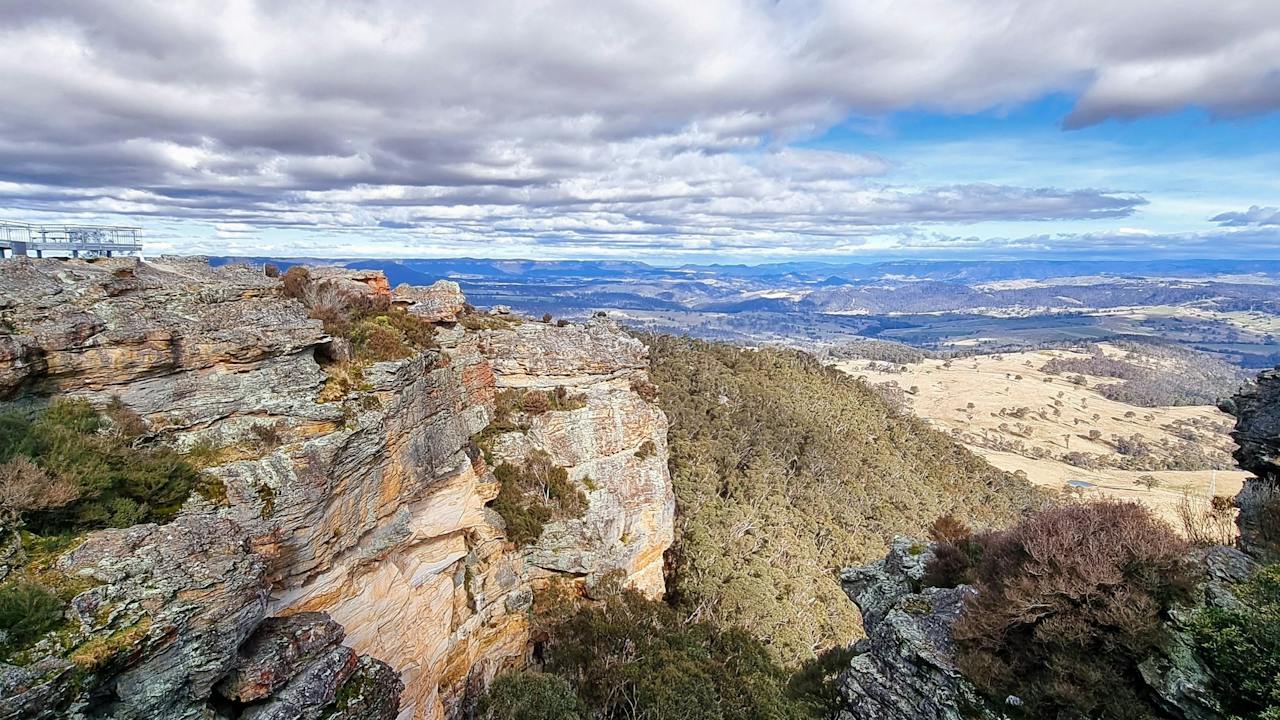
Bracey Lookout gives a 180° view of the Lithgow Valley, offering one of the best overviews of the city of Lithgow.
There are picnic tables and viewing platform giving panoramic views of the Blast Furnace Park area and the rolling hills that surround Lithgow.
The lookout was first developed and constructed by John Bracey and a group of volunteers in 1953.
Eskbank House and Museum in Lithgow is a historic home, with splendid furniture, a display of Lithgow Pottery and other period pieces, a blacksmith's forge and a coach house.
Built in 1842 by Thomas Brown, Eskbank House is a sandstone building in the Georgian style. The four front rooms have been preserved much as they were in Thomas Brown's day, and contain some beautiful Regency and early Victorian furniture.
The museum has an extensive collection of Lithgow Pottery, memorabilia and photographs of early Lithgow as well as a static steam engine display. The gardens contain a stone stable and coach house, and an unusual stone hexagon garden shed and picnic area available to use.
After a year closed, they are reopening in stages. There are no firearms on display, but visitors can explore the Factory history exhibits and the General Machine Shop with its historic machinery collection.
In 1906, the Australian Government decided to ensure Australia's self-sufficiency in defence, leading to the establishment of the Lithgow Small Arms Factory in 1912.
This museum honours the rich history of Australia's first high-precision mass production facility and the remarkable people who shaped it. It celebrates a proud legacy of Australian manufacturing and innovation.
Although the museum is renowned for its outstanding firearms collection, it also tells a broader story - one of Australian manufacturing, innovation, and the people who made it possible.
The factory was highly versatile, producing a wide range of non-military items. On display is an intriguing assortment of commercial products, from home appliances to agricultural, industrial and medical equipment and parts.
In 2006, Ron Hayes donated his exceptional handgun collection. The Hayes Gallery showcases duelling flintlocks, ladies' muff pistols, and finely engraved masterpieces that captivate even those with little interest in firearms.
Built in 1923, the General Machine Shop is an evolving exhibit of industrial machinery and manufacturing processes. Visitors are welcome to explore this impressive historic building and its collection.
The remnants of the Lithgow Blast Furnace stand tall, reminding us that Lithgow was the birthplace of the Australian iron and steel industry.
Constructed in 1913, the Lithgow Blast Furnace, at its peak, produced 105,000 tonnes of pig iron produced primarily for use by the Trans-Australia Railway.
Today, the precinct can be visited, with interpretive signage guiding the way through the fascinating journey of discovery.
Established in 2003 and located just minutes from the centre of Lithgow, Secret Creek Sanctuary is a peaceful bushland haven dedicated to the conservation of some of Australia's most unique and endangered species. After being significantly impacted by the 2019 bushfires, the sanctuary became part of the Gardens of Stone Visitor Centre and re‑opened to the public in April 2025 through bushfire recovery funding that supported essential restoration.
Visitors can see a range of native wildlife including Koalas (with a resident joey), Eastern Quolls, Tasmanian Devils, Dingoes, Brush‑tailed Rock‑wallabies, Emus, and other species that call the sanctuary home. As a true sanctuary, our animals live in spacious, naturalistic habitats and are free to retreat to their safe areas at any time, so sightings may vary throughout the day.
A self‑guided walking track winds through natural bushland and a secluded gully, leading visitors past enclosures and areas where several species free‑range. The main section of the walk is wheelchair and pram accessible, with interpretive signage to help visitors learn more about each species and their conservation stories.
The Visitor Centre features an indoor reptile display and a gift shop and the sanctuary has a kiosk offering drinks and light food options. Secret Creek Sanctuary provides an immersive, respectful wildlife experience where conservation, education, and animal welfare come first.
A multiple award-winning museum of mining and industry. The visitor experience focuses on stories of people who worked in the region's mining industries, presented through a range of multimedia and physical media. The museum also hosts community events, weddings, and has artists in residence. Enjoy the historic buildings, special collections, and bushland setting.
Hassans Walls Lookout is the highest scenic lookout in the Blue Mountains at approximately 1,100 metres above sea level. Look out to Mount Wilson, Mount York, Mount Tarana and Mount Blaxland and the whole Hartley Valley below. To the south are the Kanimbla and Megalong Valleys and Mount Bindo (1,363 metres).
The reserve covers an area of over 780 hectares and reaches an elevation of 1136 metres above sea level. This is where you will find the highest official Scenic Lookout in the Seven Valleys looking over the Blue Mountains - with expansive views from Mt. Tomah to Mt. Lambie. The Wiradjuri name for the area is Gnallwarra.
Walk or drive to Bracey Lookout and keep your eyes open for over 60 varieties of native orchids and other beautiful wildflowers. You may see the rare purple copper butterfly, lyrebirds, and maybe even a koala.
Spectacular cliff lines, pagoda rock formations and cool fern filled gullies make up the reserve - a great place to picnic, walk or bike ride.
Elevate Me Pilates is a boutique reformer Pilates studio located just three kilometres from the Lithgow town centre, set in a tranquil country setting with a large window overlooking Mount Walker in Bowenfels. The only reformer Pilates studio in the Lithgow region, it offers a unique and elevated approach to movement and wellbeing.
The studio features a thoughtfully designed, high-end fit-out with a refined, calming aesthetic. Soft neutral tones, natural textures and light-filled interiors create a warm and welcoming space that feels both luxurious and grounding. Every detail has been carefully considered to enhance comfort and provide a beautiful environment to move in.
With a small, eight-bed setup, the studio allows for personalised guidance and a more intimate class experience. Positioned in a very private setting, the studio offers an undisturbed view of Mount Walker directly from the reformer beds, creating a peaceful and immersive atmosphere.
Sessions are designed to suit all levels, beginners to more experienced clients, with layered options to support progression.
Surrounded by open landscape and local wildlife, the space offers a calm and refreshing environment.
Open seven days a week, Elevate Me Pilates welcomes both locals and visitors seeking a mindful, low-impact workout in a quiet and visually inspiring setting.
Casual passes are available to purchase online, easy for visitors to join a class while in the region.
Lake Lyell is a beautiful destination within two two-hour drive from Sydney. It provides visitors with access to the lake via a concrete boat ramp for water skiing, fishing, kayaking and general boating.
The park has both powered and unpowered sites, hot showers, free barbecues, and a children's playground. It is a magnificent bush setting and is only 10 minutes from Lithgow.
The park also has a number of picnic tables, catering for overnight visitors and day visitors.
Lake Lyell provides cooling water to Mount Piper Power Station. Water is pumped from Lake Lyell Dam on the Cox's River, about 20 kilometres from the power station to the Thompson's Creek Dam, close to Mount Piper, which provides an additional 27,000 megalitres of cooling water.
The picturesque, and very easy walking, 18-hole golf course at the Lithgow Golf Club offers quite a challenge to all levels of players.
The men's par is 72 at just a few metres under 6,000 metres, and 74 for the ladies at over 5,400 metres. Play a round of golf surrounded by native wildlife.
Visiting players are welcome and bookings can be made at the pro shop.
Zig Zag Railway is one of the Blue Mountains' most distinctive heritage experiences: a spectacular journey through dramatic Australian bushland aboard a historic railway, built in the 1860's. Zig Zag is a short drive from Sydney and the Blue Mountains.
Set high in the mountains at Clarence, the railway follows part of the world-famous Great Zig Zag — an extraordinary 19th-century engineering achievement. Today, visitors can experience the landscape, stories and scale of this remarkable railway heritage while travelling through sandstone cuttings, historic tunnels, deep bushland valleys and breathtaking mountain scenery.
Zig Zag Railway operates every day, with four departures daily and a choice of experiences to suit different itineraries. The 90-minute Signature Journey is the complete heritage railway experience, travelling through the Clarence Tunnel and down the escarpment towards Bottom Points. For visitors with limited time, the 45-minute Discovery Journey provides a shorter introduction to the railway, its history and the surrounding Blue Mountains landscape.
More than a train ride, Zig Zag Railway is a relaxed experience for families, couples, groups, rail enthusiasts and international travellers. Guests can enjoy café refreshments, browse railway-themed souvenirs, local and Australian-made products, and explore the station precinct.
With heritage train services, accessible facilities, family-friendly amenities and special events throughout the year, Zig Zag Railway combines history, scenery and storytelling in an authentic Australian heritage adventure.
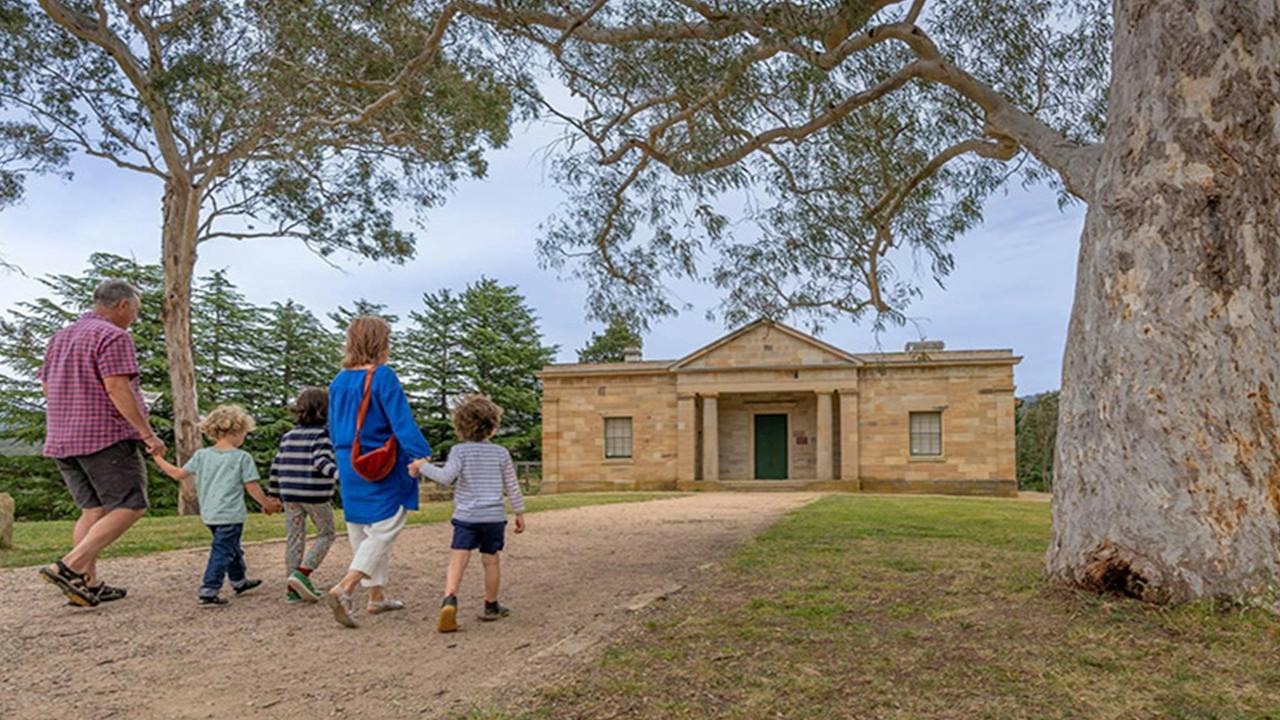
Hartley Courthouse was designed by colonial architect Mortimer Lewis in the Greek Revival style. This imposing building was constructed of locally quarried sandstone in 1837 and remains largely intact.
You'll feel immersed in its past with re-enactments of the court process through audio tracks and holograms. You can even step into a prison cell that kept many notorious bushrangers and cattle thieves. Inside the cells, with their bars and bolts still in position, you can imagine the thoughts of men used to roaming the country locked up tight in this remote prison.
In 1887 the Hartley Court of Petty Sessions was officially closed. It was reserved for public recreation in 1914 and became a popular rest stop for people travelling to Jenolan Caves. Today the building stands as a reminder of the past and the development of the colony.
A great daytrip from Blackheath or Lithgow, Gold Rush Antiques is rich with rustic village charm, and offers a unique shopping experience.
Built in the 1940s, this unique building is a beautifully restored mechanics garage that offers an authentic taste of a bygone era.
Conveniently located in the centre of Hartley Historic Site, you'll be well-placed to enjoy the surrounding attractions. Across the road you can visit Hartley Historic Site Visitor Centre to discover the town's past with a self-guided tour. Or purchase locally made art from the Kew-Y-Ahn Aboriginal Gallery.
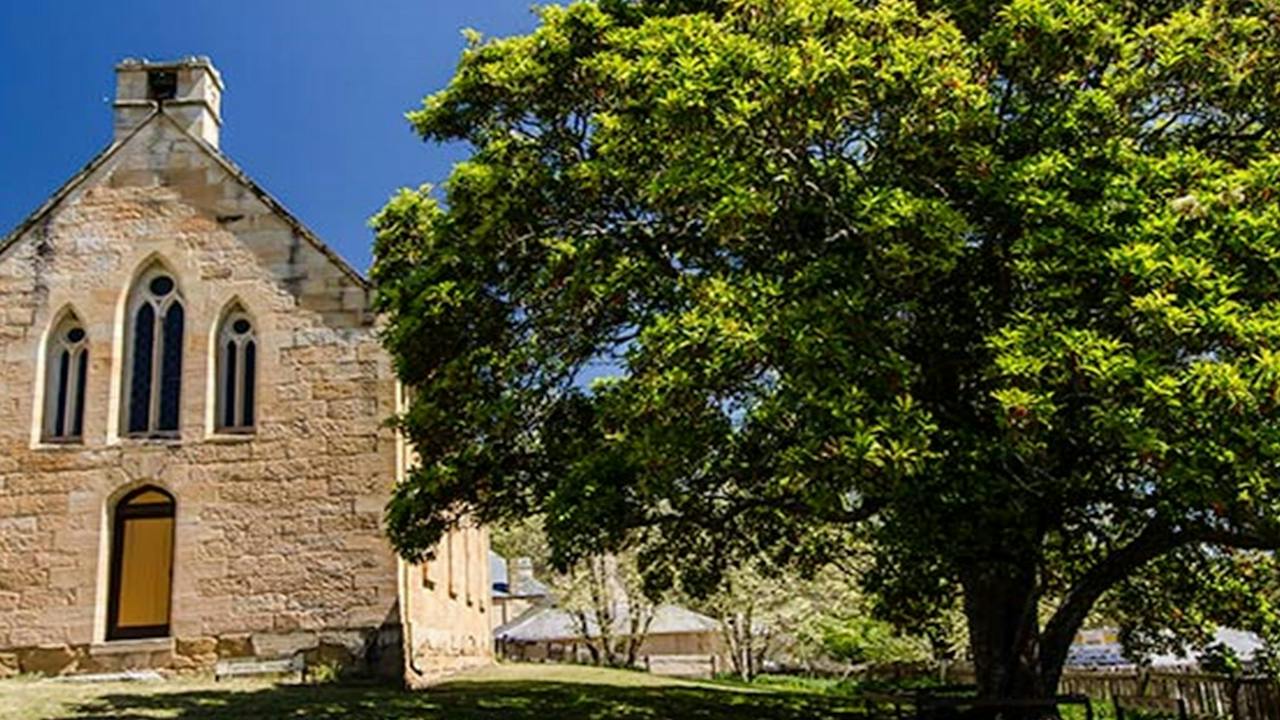
The beautiful pale sandstone Former St Bernards Church was built by local stonemason Alexander Binning, probably from a Gothic prototype. Before it was built, services had to be held in Hartley Courthouse, with the first priest arriving from Ireland in 1838. The stonework was completed in 1846, but the windows and altar came later.
St Bernards remained the parish church until the mid-1880s when services transferred to Lithgow, but it hosted the occasional service until 1963. Careful renovations have kept the building in a beautiful condition. It's a well-preserved and pretty church that's well worth a look around. You can also take great photographs in the grounds for any occasion, even just a day trip.
Hartley Historic Site is surrounded by serene pastures and is great for a pit-stop or longer stay near the Blue Mountains. You can bring your dogs along as they're permitted in Hartley Historic Village but need to be on a lead at all times.
Start at Hartley Historic Site Visitor Centre to see photographs and displays of the village in its heyday. You can also grab a brochure to help you explore the significant historic buildings on site.
Enjoy a coffee or tea in the heritage-listed building that's now The Postmistress Cafe and Store. Then visit Gold Rush Antiques in the old Corneys Garage, an antique shop built of timber and iron in 1945.
Stretch your legs with a 30min return walk to a granite rock outcrop named Kew-Y-Ahn which holds great significance to the local Aboriginal community. With dreamy views over the valley and rolling hills it's a great spot for a picnic.
For a longer stroll, take the Rowsons River Walk 1km loop. This elevated boardwalk follows the pretty River Lett to the remains of Rowsons Huts. Dip your toes in the river's cool waters before looping back to...
Lost City North lookout offers some of the best views of the pagoda rock formations in Gardens of Stone State Conservation Area. Just 17km from Lithgow, it’s easy to reach by car and has an accessible concrete path leading to sweeping views across the park.
From here, you’ll see pagodas rising from the rolling landscape of the Newnes Plateau. These rock formations are ‘platy’ pagodas and feature distinctive horizontal layers of ironstone.
Below the lookout, a forested gully carved by Marangaroo Creek winds through the landscape. On the horizon, you can see the outlines of Dark Corner Mountain and Coolamigal Mountain towards Bathurst.
Accessible picnic tables and benches make this a wonderful spot to enjoy a scenic picnic lunch. As you take in the views, keep an eye out for yellow-tailed black-cockatoos, gang-gang cockatoos and crimson rosellas. In spring and summer, you may see native short-tongued bees feeding on yellow daisy goodenia flowers, which are the only flowers they collect pollen from.
If you’re able to explore more of the area on foot, take the family-friendly Lost City walking track. The 6km return walk connects Lost City lookout and Lost City...
Kew-Y-Ahn is a gallery exhibiting the work of Aboriginal artists of Central West NSW, located at Hartley Historic Site east of Lithgow.
Work by Aboriginal painters, weavers, designers, jewellers and photographers from across the NSW Central West. Lots of well-priced gifts through to major artworks.
The project is a partnership between Arts OutWest and NSW National Parks.
Collits Inn is a historic colonial inn set in the scenic Hartley Valley of New South Wales. Established in 1823 by former convict Pierce Collits, it originally served travellers crossing the Blue Mountains on their journey to Bathurst. Built mainly from timber slabs and weatherboard, the inn reflects the simple, practical style of early Australian settlement.
Today, Collits Inn operates primarily as a wedding and events venue, offering a unique blend of heritage charm and natural beauty. Its expansive grounds and peaceful rural setting make it a popular destination for celebrations and private functions. In addition, the site hosts regular public open days, where visitors can enjoy live music, local food, and a relaxed country atmosphere. These events provide an opportunity to experience the property's history while enjoying its vibrant, community-focused environment, making it both a cultural landmark and a lively attraction.
Lockyers Road Walking Track is one of the most historic walking tracks in the Blue Mountains. The track is one of the original 'roads' used to descend into Hartley Vale. Hand built by convicts, remnants of their hard work can still be seen all along the track. This dog friendly track has beautiful views over the Hartley Valley and spectacular birdlife.
The Gardens of Stone State Conservation Area links three national parks – Wollemi, Blue Mountains and Gardens of Stone – with stunning scenery and walking tracks. View the awe-inspiring geographical features like sandstone cliffs, deep slot canyons and dramatic gullies; take the area's mining history; or visit the Lost City, an incredible landscape of sculptural, ironstone-banded 'platy' pagodas rising up out of the dense bush.
Mount York, 7.5 kilometres from Mount Victoria is a natural site that at 1061 metres has commanding views over the western plains, many layers of Aboriginal and European heritage, several convict built roads (now walking tracks) and remnants of the old convict-built roads (1823-1829) can still be seen
Monuments at the site demonstrate a change in architectural style and social means of commemorating historic events such as the first European crossing of the Blue Mountains, May 1813 by Blaxland, Lawson and Wentworth, survey of the first road by George Evans, November 1813 and building of the first road, Cox's Road, in 1814. Further along, Mount York Road is historic convict-built Lawson's Long Alley and Lockyers Line of Road; Berghoffers Pass and Bardens Lookout.
Mount York is traditionally the land of the Gundungurra and Darug Aboriginal people and today is popular for bushwalking, abseiling, mountains biking and rock climbing.