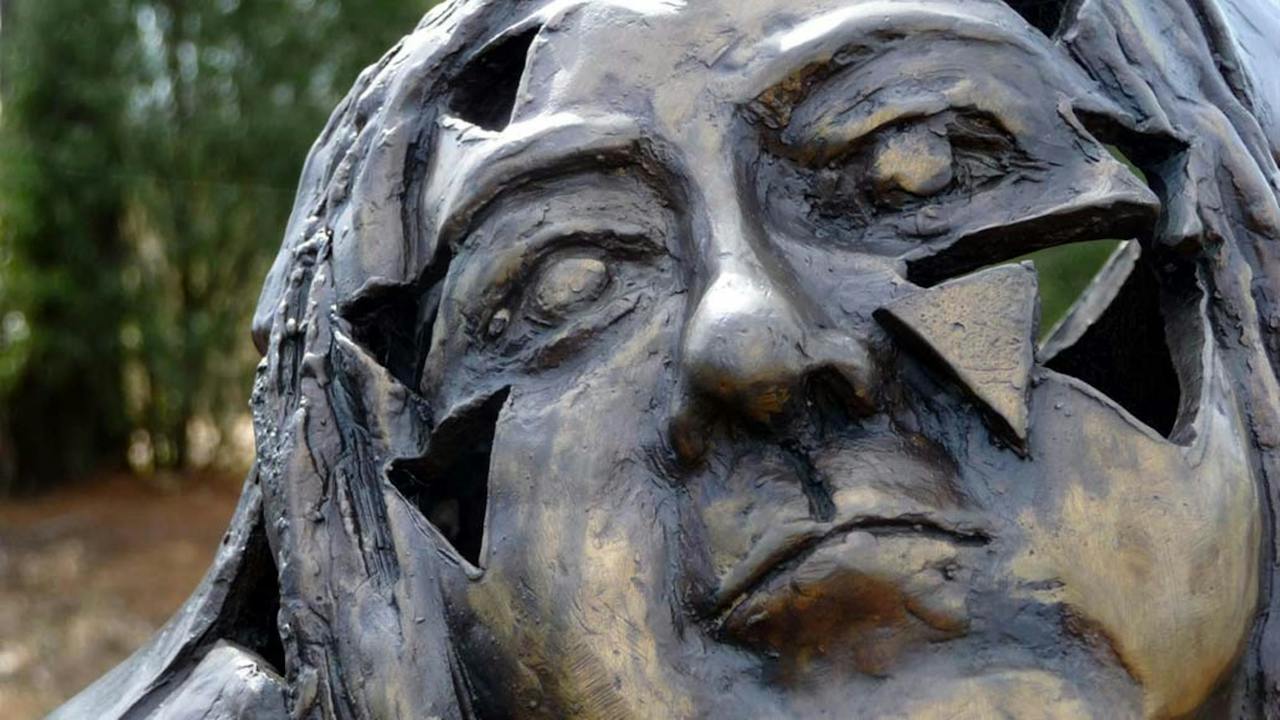
Cunningham Park is an extensive shady space complete with picnic and barbecue facilities, toilets, a user-potable water refill station and a dump point.
The Park also features play equipment for children and fitness equipment for the keep fit enthusiast. There is also a fantastic new skate park which has recently been constructed.
The Soundtrails tells of Bingara’s history, in particular the Orange Trees and the experiences of living through war both at the front and at home in Bingara.
Local residents who have given their stories include Brian Hughes, Jean O’Brien, Pat Brown and Joan Bull. Joan Bull tells of her visit to Sydney at the beginning of WWII to farewell her brother who had enlisted with the Light Horse Regiment. She describes the spectacle of seeing the Queen Mary liner and expresses her fear of not knowing if she will see her brother again.
Beautifully produced by award-winning sound producers, the Bingara Soundtrails are a living, breathing doorway into the voices, sounds, and music of the people of Bingara. It includes performances by local artists including Jamie Wilson. Jamie took the words of a poem found in the George Bateman journal and created an amazing song.
Housed in the original Post Office Hotel, which was built in 1860 from pit-sawn and hand-sewn local cypress timber, the building once had a very mixed clientele, including the 'Father of Federation', Sir Henry Parkes, and Fred Ward, the bushranger.
It was also once a blacksmith's shop and an old school room from the days when one-teacher schools were very popular among the small country towns and villages.
The museum is home to historical machinery, local memorabilia and an extensive geological collection.
The Bingara Historical Museum Complex comprises several buildings other than the Museum itself. One houses an extensive photo collection which the Bingara District Historical Society has catalogued, and another houses a fascinating collection which comprises fossils, minerals (Australia wide), sea shells and bird's eggs.
A sign Gil "Goldfinger" Craig's Gem and Mineral Museum takes pride of place on the centre wall as you enter the museum as it was Gil Craig, a local geologist, who donated the majority of the collection to the museum.
A great example of some fascinating finds in the museum is this bottle made for H J Fay, Bingara. It is no ordinary bottle, the top is sealed bar a few holes which released the liquid and in the neck of the bottle sits a marble. The only way to access the marble was to break the bottle.
The magnificent Roxy Theatre, situated on the main street of Bingara, is a striking building, with a history as colourful as its painted exterior. Built in 1936 by three Greeks, it operated as a cinema until 1958, after which it was closed and lay dormant and untouched for forty years.
In May 2004, The Roxy was faithfully restored to its original splendour and was re-opened to the public. The theatre embraces some of the most striking original art deco architecture in New South Wales and it still contains the original fixtures and fittings, including the ornate stucco plaster, paintwork and coloured lights from 1936.
Today The Roxy functions as both a multi-purpose cinema and a regional centre for the performing arts, with The North West Theatre Company taking residence there. The quality and standard of the performances and events, make any visit worthwhile.
This Soundtrail begins at the Myall Creek Memorial site, along the Bingara to Delungra Road.
It’s June 1838 in Myall Creek, when a squatter leads a gang of convicts to a group of Aboriginal men, women and children, and a brutal, unprovoked massacre occurs. Blood was shed, lives cruelly taken away and shrill cries for justice heard. And for once, justice was rightly served. It all came down to people like the Governor of the day, or the lone convict who resolutely refused to play a part, that helped shine a light on the national denial, and ensure that the men involved would pay for their crime.
The Myall Creek story did not finish then, and in the year 2000 hundreds of gatherers looked on as a descendant of the massacre embraced a descendant of the perpetrators, watched on by a descendant of those who had brought them to justice. It was a poignant, long-awaited moment, but with those lasting embraces, those that were condemned by their past actions were finally forgiven.
Please be advised that this Soundtrail contains the voices and photos of Aboriginal people.
This 290 million-year-old volcanic remnant is a geological wonderland with rock pools and permanent water flowing into cool water holes. A great spot to explore, relax and enjoy the great outdoors, it is easily accessed from the bitumen road.
The Rocky Creek Glacial Area is an amazing geological wonder, well worth the visit. But be warned, there is no ice. These landform features are the result of glaciers that existed during the last one million years, in the Pleistocene Epoch.
Aside from the geological interest of the Glacial area, it is also a great picnic spot and an incredible place to go for a swim. The water is crystal clear and very soothing on a hot summer's day.
The Myall Creek Massacre Memorial Walk was set up as a tribute to the group of 28 unarmed Aboriginal people killed by a gang of stockmen on 10 June 1838.
The seven men involved were sentenced to hang. It was the first time that white people had been hung for murdering Aboriginal people.
Dotting the walk are various historical stones and etchings by Aboriginal artist Colin Isaac telling the story of the massacre. A bronze plaque at the main memorial reads:
"In memory of the Wirrayaraay people who were murdered on the slopes of this ridge in an unprovoked but premeditated act in the late afternoon of 10 June 1838. Erected on 10 June 2000 by a group of Aboriginal and non-Aboriginal Australians in an act of reconciliation, and in acknowledgement of the truth of our shared history. We Remember them (Ngiyani Winangay Ganunga)."
If you are looking to strike it lucky or just seeking a fun-filled family day out, make sure your first stop is Three Creeks Gold Mine. Owner Paul Meyer is a wealth of fossicking knowledge and will teach you the ins and outs of fossicking, gold panning technique and what to look for. Best of all you get to keep what you find!
There are several spots to fossick, and participation is not governed by age, everyone gets to enjoy the thrill of the hunt! You can try your hand at gold panning, panning for garnets or sieve for perfectly formed quartz crystals.
Three Creeks is a working gold mine that allows you to step back in time to the mining days of old. Learn the history of the mining site and browse through the artifacts displayed in the museum. Of historical interest at the site are Lady Morgan Reef and the Edwards, Porter and Wakeley’s, Hanton’s, Neal’s and Miller’s Shaft mines.
A vast collection of jewellery, gold, garnets, crystals and rock minerals are also on display and available for purchase.
There is much to see and do at the mine so amenities, a barbecue area and bush camping facilities are available.
Download the Three Creeks Gold Mine Flyer.
Ceramic Break is a sculpture park located on a pastoral property in northern New South Wales, 15 kilometres from the town of Warialda on the Bingara Road or 25 kilometres from the town of Bingara on the Warialda Road.
Ceramic Break has three stylish galleries with sculptures and artwork, often featuring exhibitions of local artists. Meet the life-size Allosaur and his friends.
An intriguing and unique place with something for everyone, including walking trails, gift shop and the unique "Ceramic Break' artwork.
Nestled in a tranquil natural bushland setting, Cranky Rock Recreation Reserve is a fascinating and extensive jumble of granite boulders balanced at the edge of Reedy Creek.
Cranky Rock is located eight kilometres east of Warialda off the Gwydir Highway and is serviced by a fully sealed road making it easily accessible for all vehicle types.
There are both powered and un-powered campsites, barbecue facilities, children's playground, picnic shelters and a kiosk. There is an observation platform installed near the top of the main boulder group and is the perfect way to survey and photograph the surrounding area. The natural bushland attracts many species of native wildlife, making Cranky Rock perfect for bird watching and makes for a beautiful bush walk.
The name Koorilgur derives from an Aboriginal word meaning 'low scrub and bush'. Koorilgur Nature Reserve has been developed for bushland walking, wildflowers, fauna and flora observation. Wildflowers are abundant in Spring.
The Koorilgur Nature Walk has been divided into different length tracks, these provide for the person who wants to take a casual stroll, as well as those who are more adventurous bush walkers.
Admire rock markings from the original sandstone mining days as well as enjoy views across the valley.
Carinda House is the local arts and craft centre for Warialda, showcasing local handmade crafts, artworks, country-style baking, jams, preserves, babywear, hand knits, unique stationery, souvenirs, available for purchase, and temporary exhibitions.
Carinda House has a long history in Warialda, first being built for the W. H. Crane family in about 1880. Mr Crane was the proprietor of the Royal Hotel and at various times, a saddler, butcher, farmer and grazier. Mrs Crane was the daughter of Warialda's first appointed Chief Constable.
Carinda was constructed of pit-sawn timber slabs. Horse stables and paddocks were once adjacent to the home, and the top floor was added in the early 1900s.
In the 1920s, Nurse Marshall conducted a maternity hospital, and later, Mr and Mrs Stehr ran a boarding house. In 1942, Mr Les Rolfe occupied Carinda and operated a Stock and Station Agency. His widow later established an insurance agency on the premises. In 1977, a committee of Warialda residents purchased the property for use as a Community Cultural Centre. Carinda is now managed and promoted by local volunteers with support from the Gwydir Shire Council.
Carinda House is perfect as a unique venue for dinners, private parties, meetings, fundraising events and temporary exhibitions.
When visiting Warialda drop into the Visitor Information Centre (VIC) and meet the friendly staff and volunteers. They will help you with accommodation, attractions and local information to make your stay an interesting and memorable one.
The Warialda VIC is a new and modern building, with toilets, a retail section, local produce and art. The VIC is also home to the famous Wells Gem and Mineral Collections, certainly well worth the look.
Depending on your interest, you will find something that suits just about any visitor.
For the artist, there is the unique Ceramic Break Sculpture Park, an extremely interesting and different look at sculpture. Or for those interested in camping or bush walking Cranky Rock Nature Reserve is a must.
If history is your thing then you’ll love the old heritage-listed buildings throughout Warialda including the Courthouse, Convent and Carinda House, just to name a few. The Pioneer Cemetery is a popular place to visit, where many people come to trace their ancestors.
Local artist, David Moor, has a cheeky take on life in the outback as well as a distinctive style, bringing to life colourful and local characters.
Enjoy a pleasant stroll around the main streets of Warialda and admire his work that has been mounted on various buildings. There's 13 to spot, how many did you find and which one is your favourite?
Created in 2005, Terry Hie Hie Aboriginal Area was once an important ceremonial and gathering place for the Gamilaroi, Kamilaroi, Gamilaraay or Gomeroi People. Today it's a tranquil spot, scattered in sections around the small town, which is also called Terry Hie Hie.
Evidence of long-term use of the area includes at least 240 axe-grinding grooves and the remains of a corroboree ground. A bora, several carved trees, scarred trees, and two Aboriginal cemeteries can also be found nearby. The local community and descendants of traditional custodains often visit for cultural, recreational and educational purposes.
Terry Hie Hie Aboriginal Area is home to a staggering variety of native wildlife, including woodland birds, mammals, and reptiles. These can often be seen in lush communities of cypress pine and silver leaf ironbark woodland.
Take an opportunity to wander through the forest, soaking up the ambiance, cultural significance, and natural splendour of a place that has been appreciated and admired by people for hundreds of years.
Terry Hie Hie Aboriginal Area also has an innovative educational program that provides teachers and students a rare opportunity to learn about the language, history and culture of the Gamilaroi, Kamilaroi, Gamilaraay or...
The best place to start any visit to Terry Hie Hie is at its picnic area. Gamilaroi, Kamilaroi, Gamilaraay or Gomeroi People have been using this site for many generations, and today it provides interpretative signage with a good introduction to the remaining Aboriginal sites around the township. It is also the access point for Yana-y Warruwi walking track.
The picnic area is close to a ceremonial corroboree ground, along with a memorial to the local Aboriginal elder, Lou Swan. There are also several carved trees, scarred trees and axe-grinding grooves nearby. This is a terrific spot for a leisurely picnic lunch, with shelter and basic facilities. Remember to be mindful of the cultural significance of the area as you wander and explore.
In spring months, wildflowers like lomandra and dianellas bloom in the area, and a bush tucker garden ripens for harvest. Also, don't forget a pair of binoculars if birdwatching interests you, as numerous birds can be seen overhead and nesting in surrounding trees.
Beginning at Terry Hie Hie picnic area, Yana-y Warruwi walking track offers a scenic stroll through the beautiful vegetation surrounding the township. The traditional Kamilaroi Aboriginal People once used this area for important ceremonial gatherings, and evidence of this usage still remains in the form of axe-grinding grooves on rocks.
Starting with cypress pine and silver leaf ironbark woodland, the track then weaves through open grassland and smooth bark apple woodland. In spring, wildflowers bloom abundantly, spreading colours across the landscape.
Numerous birds occupy the area, so don’t forget to bring a pair of binoculars for birdwatching. Though there are places to rest as you walk, consider packing a picnic lunch and taking advantage of the facilities back at the picnic area.
Enjoy the magnificent views looking over the township of Inverell from the Mcilveen Park Lookout viewing platform.
The lookout is located on Tabletop Mountain. Turn left off the Gwydir Highway, approximately three and a half kilometers west of the town of Inverell.
Mcilveen Park Lookout is easily accessible for coaches, caravans and motorhomes.
A visit to Waa Gorge doesn’t need to end with its picnic area. Indeed, this is only the beginning: from here, you can explore the nooks and crannies of the ancient formation. Mill-bullah walking track offers a good introduction, finishing at the beautiful Mill-bullah waterholes. 'Mill-bullah' means 'two eyes', and nearly anybody can see them on this medium-grade path along a shady creek.
Start your walk near the information shelter, which provides a fascinating insight into the box-cypress forest and dry rainforest of the area. The track from here is just 500 metres long, so it’s suitable for most visitors. For the best experience, visit in spring or autumn, when temperatures are cool, and bring some binoculars for a bit of birdwatching along the way.
From the Mill-bullah waterholes, experienced walkers can continue on to Waa Gorge through Grattai Wilderness Area by taking Waa Gorge walking track.
At Waa Gorge picnic area, you can enjoy the woodland wildlife over a long lunch before going on to explore the picturesque surrounds of Mount Kaputar National Park.
Formed over millions of years, the deep gorge and its tributary gullies are strewn with boulders and the ghostly trail of old waterways. Flowers bloom in spring, the shade is cool in summer, and woodland birds make it home at every time of year.
Waa Gorge picnic area offers a terrific base for exploring this quiet gem, with two picnic shelters nestled near box pine forests and surrounded by the peaks of Grattai Wilderness Area. Carry lunch and a pair of binoculars, or bring some sturdy shoes to follow Mill-bullah walking track and Waa Gorge walking track deep into the rock formation.
Following on from Mill-bullah walking track, the Waa Gorge walking track is a picturesque scramble for more intrepid hikers through the Grattai Wilderness Area. This track is unformed, so be prepared for a bit of a challenge as you climb a small hill on the left side of the Mill-bullah waterholes and down the other side to follow the creek into the gorge.
The walls of the gorge are spectacularly colourful, and the cool shelter offers a nice picnic spot amid the dramatic setting of the NSW Western Plains. In spring, you’ll find a myriad of wildflowers here, and the gorge is also studded with fig trees. Don't forget your camera and binoculars for some great birdwatching.
The course at the Inverell Golf Club is an interesting fully watered course with excellent greens and tree-lined fairways. The front nine is undulating with moderate bunkering, the back nine is longer and more open with water challenges on the finishing seven holes. See abundant wildlife around the course.
A Driving Range is also available.
The Club House facilities include bathrooms, bar and barbecue area, and the restaurant/function area is available for special functions.
Why not come and play a round of golf at Inverell, on the beautifully maintained country course?
Motorised buggies, social players and visitors are most welcome. Bookings advised. Limited trading on Public Holidays. Clubs and equipment available for hire - contact the club for more information.
Goonoowigal is scenic granite country, with low hills and large boulders marking the skyline, and covers 1,055 hectares.
The name Goonoowigal is a Jukumbal Aboriginal word meaning 'wallaby rocks', and it features 120 species of native birds, native fauna, remains of Chinese settlements earth covered for a large part, and 10 kilometres of marked walking tracks.
Within the reserve is the Nhunta Karra Kara (a Jukumbal word for 'quiet and peaceful') Track to commemorate the Aboriginal families who made the Goonoowigal area - which became known as the Inverell "fringe dwellers" camp - their home until the 1970s. To listen to stories from local Aboriginal families who made this camp their home as you walk the track, download the Soundtrails App on your smartphone, and then download the Goonoowigal Soundtrail.
This is a lovely area for a walk with a choice of 10 kilometres of easy walking tracks through woodlands with small creeks.
At the main entrance, you will find a grassy picnic area, toilet, barbecue and tables. Bring your own water. Dogs are not permitted.
Billabong Blue Sapphires is situated in the Tourism Inverell Complex on Campbell Street at Inverell.
The staff of Billabong Blue Sapphires welcome you to their store and can assist you with advice on the selection of good gemstones as well as advise on the gem faceting prospects of your finds in the local Sapphire Fossicking Gemfields.
Billabong Blue Sapphires offer a range of cut sapphires and quality jewellery for sale.
Come and browse the extensive range of jewellery, and the friendly staff can help you with your next purchase.